



Patient interaction is a cornerstone of any successful eye care practice. How you and your staff engage with them plays a crucial role in fostering and promoting an exceptional patient experience. From their initial point of contact with your practice to their final follow-up visit, patients should feel like their eye health and well-being is your top priority.
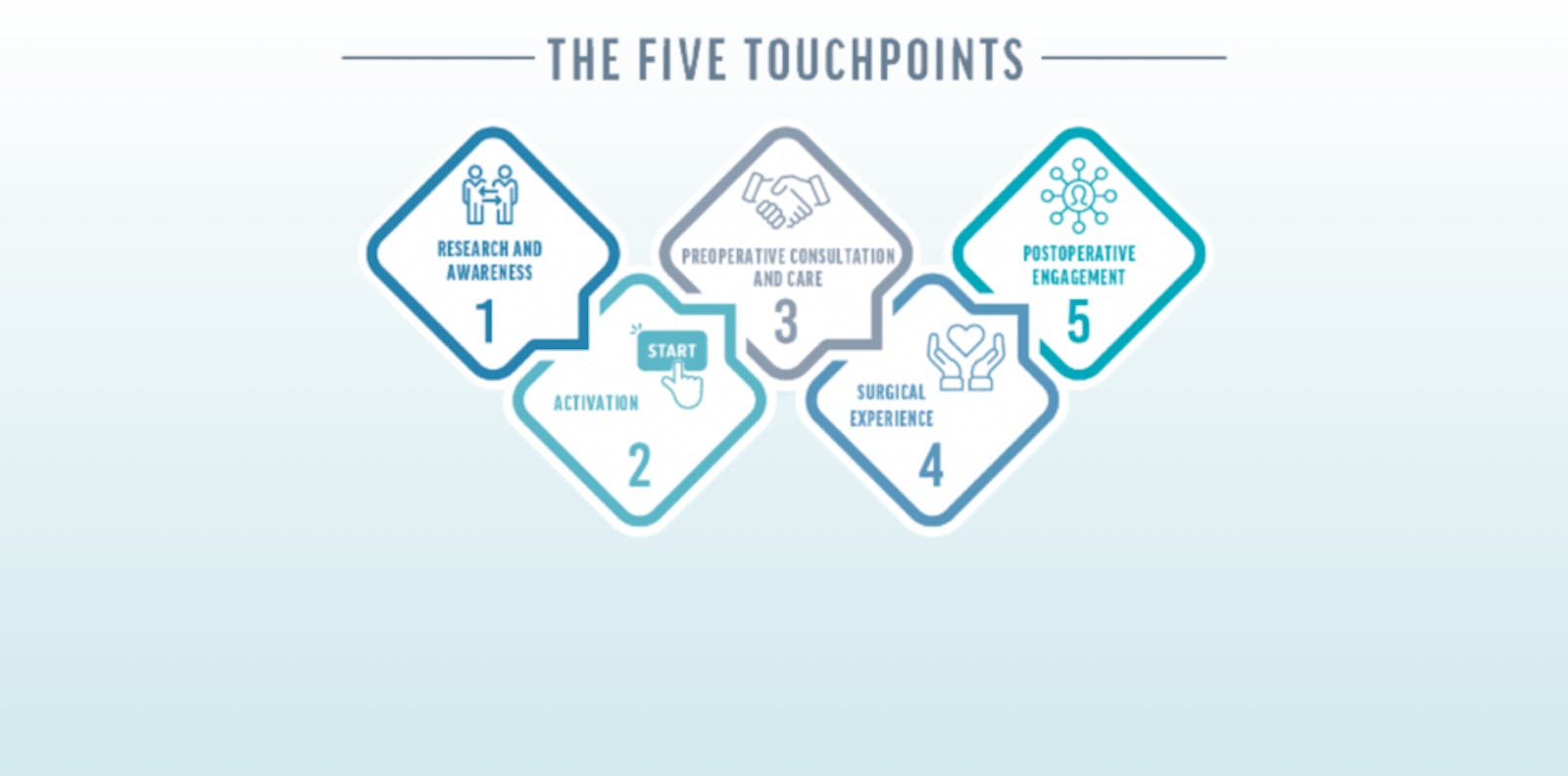
There are five crucial touchpoints in the patient journey. The five touchpoints are introduced here; later installations in this series will take a deep dive into each area. Collectively, these touchpoints are your best opportunity to establish credibility and trust with patients, educate them, and personalize their care.
THE FIVE TOUCHPOINTS
Patients have various options for refractive correction, and no single procedure is right for everyone. Patients must therefore be educated on all available options and guided toward what is considered to be their best personal option. This should be reinforced at all stages of the patient journey.
A good friend of ours says, “Trust is your currency, and reputation is your bank account.” This sentiment establishes how everything that you do leads to the next step, including gaining future referrals from your patients.
Phase No. 1: Research and awareness. The first point of contact with prospective patients can be achieved in several ways, the common thread being that it is the specific way patients are introduced to your practice—whether it be through your website, social media channels, a telephone call, or word of mouth. The research and awareness phase is the first opportunity you have to create a meaningful bond with patients and establish the first impression.
At our practice in Milan, for instance, we invest a lot of effort making sure patients who call are greeted by a person rather than a message. Patients, especially older patients, appreciate the personal touch. We focus on personalizing our digital presence, too, because there has been a shift toward this communication approach among younger generations. This includes social media, WhatsApp, and email. It is important to use the research and awareness stage as an opportunity to educate patients on the pros and cons of available procedures, including laser vision correction and lens-based correction such as the EVO ICL (STAAR Surgical).
Conversely, one of the most dangerous things in the research and awareness stage is mixed messages in the market. If patients go to one doctor’s website that says EVO ICL is recommended for -9.00 D of myopia or more and another doctor advertises EVO for -6.00 D or more, they begin to question the procedure. Providing this information on a website, when patients don’t even know what they’re a candidate for, creates confusion. Additionally, it can hinder them from even taking the next step, which is calling to schedule an appointment. The goal should not be to promote a specific procedure at this point but rather to get them into the practice, where they will learn what procedure(s) is right for them. In the first phase, it’s enough that they know there are a range of premium refractive options for them to achieve their goal of visual freedom from the hassles of glasses and contacts.
Phase No. 2: Activation. This is a unique opportunity to build trust and credibility with patients. When patients inquire about a specific procedure, they are informed that we offer a variety of procedures and that they will undergo an assessment to decide which is best for them. Then, once patients schedule their appointment, they receive a personalized video clip from the surgeon, welcoming them to the practice and getting them ready for what to expect from their appointment. This establishes a patient’s bond with the surgeon, and it gives them one more touchpoint with the surgeon.
Phase No. 3: Preoperative consultation and care. This phase encompasses the clinic’s branding and appearance, staff appearance, patient flow, treatment positioning, and education and engagement. When patients come into our clinic, we like to personalize their greeting. They check in with a concierge specialist, who informs the front desk that the patient has arrived. When the patient comes either off the elevator or up the stairs, they are greeted by name.
Additionally, we have patients stay with the same technician throughout their entire workup, so they start to build a bond. Our conversion rate increased when we instituted this practice a few years ago because patients trust the technician to help guide their decision, which is of course based on the surgeon’s decision tree and their specific recommendation.
We also ask patients to fill out the same visual symptoms questionnaire preoperatively and again postoperatively. This not only helps solidify how much the patient’s vision has improved after surgery, but we also use the real-world data from inside our practice to educate potential patients on what they can expect postoperatively.
For a patient with -10.00 D of myopia who is considering an EVO ICL, for example, we show them the results from another patient with a similar prescription who underwent the same treatment. We say, “This is what they were experiencing preoperatively, and this is what they experience postoperatively.” It’s a great way to build interest in the procedure. We also discuss the benefits and risks associated with the recommended procedure.
Phase No. 4: Surgical experience. Long gone are the days when surgeons were considered the hero. Today, this role belongs to patients. The goal is for them to leave their surgical experience feeling like they were the focus, with individual care and attention received at every step.
We have individual pre-surgical waiting rooms where a patient and their family can stay together privately before surgery. Patients go back to the same room immediately postoperatively. This helps them to be as comfortable and relaxed as possible. The family has the option to watch a live video feed of the procedure, and we have someone stay in the room to explain what’s happening. After surgery, we provide patients with a meal, which they selected previously from a menu.
Phase No. 5: Postoperative engagement. If you don’t ask for business, you’re not going to get it. We therefore tell patients, “If you’re unhappy, tell us so we can fix it. If you’re happy, tell others, and let them know that we can do the same for them.” We specifically ask for a word-of-mouth referral. We provide QR codes for patients to use to leave testimonials or feedback on various platforms.
We also give our surgical patients a bottle of champagne with a customized label on their day 1 postoperative visit, and we snap a picture of them holding the bottle for them to post to social media. We tell them, “We would love to have a drink with you. But obviously, here in the office, we can’t. We wanted to send this back home with you, so that you can enjoy the champagne in the only glasses you need to use from now on.”
CONCLUSION
The strategies outlined here are just a few ways that we help patients feel special during their surgical journey. Positive interactions with patients in each of the five touchpoints help them feel heard, supported, and well-informed about not only their options but their personal eye care journey and outcomes.
Other Articles in this Series
Article 2: Strategies to Increase Awareness of EVO: Part 2 of 6
Article 3: Empowering Patients Through Education: Part 3 of 6
Article 4: Building Patient Trust During Consultations: Part 4 of 6
Article 5: Prioritizing the Patient in Elective Refractive Surgery: Part 5 of 6
Article 6: The Art of Patient Referrals: Part 6 of 6


Important Safety Information
Important Safety Information for the EVO/EVO+ ICL
The EVO/EVO+ ICL is indicated for phakic patients 21-60 years of age to correct/reduce myopia up to -20.0 D with up to 6.0 D of astigmatism. Careful preoperative evaluation and sound clinical judgment should be used by the surgeon to decide the risk/ benefit ratio before implanting a lens in a patient with any of the conditions described in the DFU. Prior to surgery, physicians should inform prospective patients of possible risks and benefits associated with the EVO/EVO+ ICL. Reference the EVO/EVO+ ICL DFU for a complete listing of indications, contraindications, warnings and precautions.

