



The fact of the matter is that the conventional glaucoma treatment paradigm doesn't work very well. According to data from the US, about 13.5% of glaucoma patients will lose vision in one eye within 20 years of diagnosis, and 4.3% will go blind in both eyes.1 Data from Europe are actually worse: within 20 years, 38% of glaucoma patients will go blind in one eye, and 13% will go completely blind.2
Moreover, 50% of patients discontinue drops within 6 months,3 and over 90% of patients are non-compliant with their medication usage.3-6 Adding to the difficulty, half of glaucoma patients are lost to follow-up after 1 year, and two-thirds of them never return.7 Unfortunately, patients who lapse in their drop regimen for more than 3 years are twice as likely to go blind.8
Obviously, these numbers offer room for improvement; we should never accept that some sufferers will lose their vision. The question is, can we do better (Figure 1)?
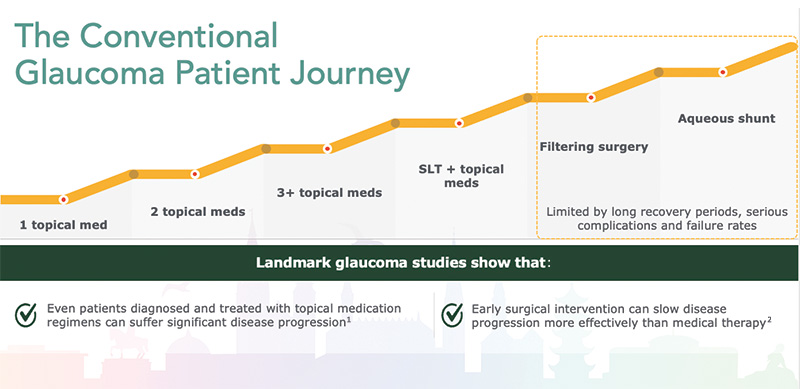
Figure 1. The current “meds first and always” mindset is being challenged, as a growing body of evidence supports an interventional approach to glaucoma management. (1. Malihi M et al. Ophthalmology. 2014;121(1):134-141. 2. Musch DC, et al. Ophthalmology. 2009;116(2):200-207.)
Patients’ ability to comply with their topical glaucoma drop prescriptions faces significant barriers, most notably cost, dosing schedule (remembering to put them in), and side effects. We know that our patients are well-intentioned, because they're scared of losing their vision, and yet they simply don't get their drops in. I am not saying there is no place for eye drops in the treatment of glaucoma, but we clinicians should continuously seek ways to improve our treatment options.
To me, interventional glaucoma presents an opportunity for us to do better for our glaucoma patients by approaching their treatment proactively. For example, we can no longer wait to see nerve damage before we respond. We have diagnostic technology and interventional procedures available, but because glaucoma is difficult to treat, patients need customized treatment plans.
I joined a group of colleagues in the US, called the Interventional Glaucoma Working Group, to develop a standardized approach that allows us to enhance long-term patient care but also optimize the treatment experience, because our goal is really to maximize our patients’ quality of life. The Interventional Glaucoma Consensus Treatment Protocol (read more here) provides a stepwise, proactive approach to treating newly diagnosed, uncomplicated patients with glaucoma.9 This protocol can be implemented in any ophthalmic clinic and also shared with optometry colleagues who may be co-managing these patients.
To summarize, we are privileged to be able to take care of our glaucoma patients, but we are also challenged to be upfront with them about the interventional treatment options we can integrate into their care.

For additional safety information on iStent products, see here: www.glaukos.com
Glaukos® is a registered trademark of Glaukos Corporation. All rights reserved. ©2026. PM-EU-0391

